Carnegie Magazine is a new stop on the information superhighway
by Mark Petruzzini
The January/February issue of Carnegie Magazine is the first to be available to
the computer community through a computer network called the World Wide Web-an efficient,
convenient and easy way to travel the Internet. This means that someone who is using
a computer online can read articles and see pictures from the magazine. Web travelers
world wide include 25 million people in 145 nations.
The online magazine has been re-organized to fit its Web environment. When connecting
to Carnegie Magazine Online, the user first sees the magazine’s table of contents,
which serves as a starting point for choosing what to see next. Web travelers can
read an article by clicking on its title, or they can choose other options, such as
viewing the online bimonthly calendar of events, or reading “At The Carnegie” for
more details about ongoing exhibitions and activities. While the online text is the
same as the print version, the electronic magazine contains fewer pictures to allow
for faster viewing on the busy network.
Through the leadership of the Carnegie Library of Pittsburgh a great deal of information
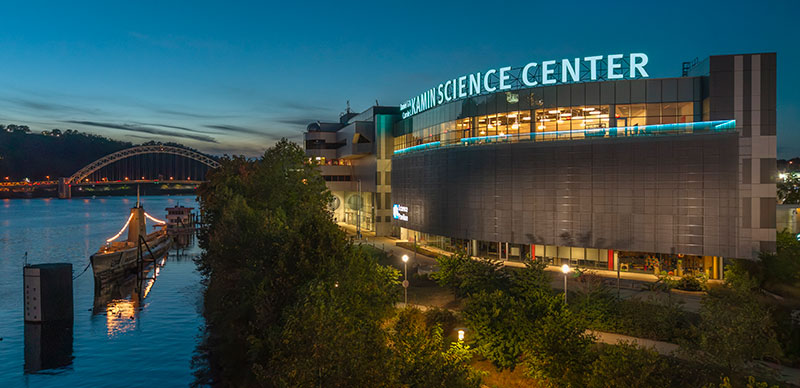
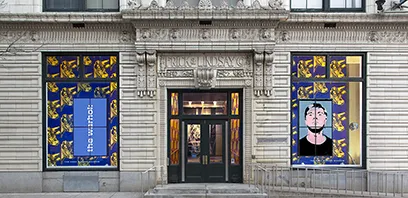
about The Carnegie is currently online. The Carnegie Science Center and The Andy Warhol
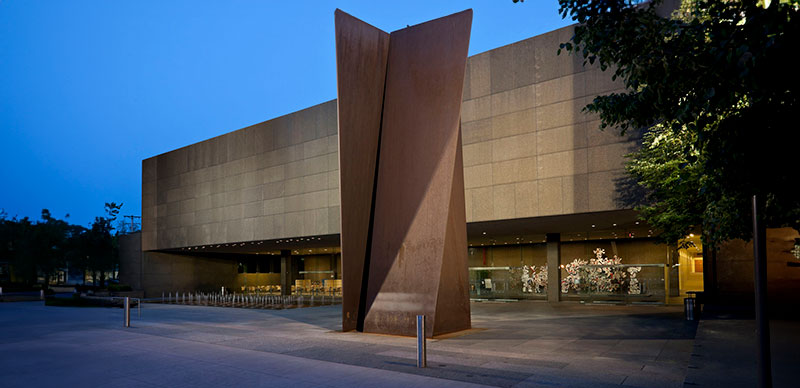
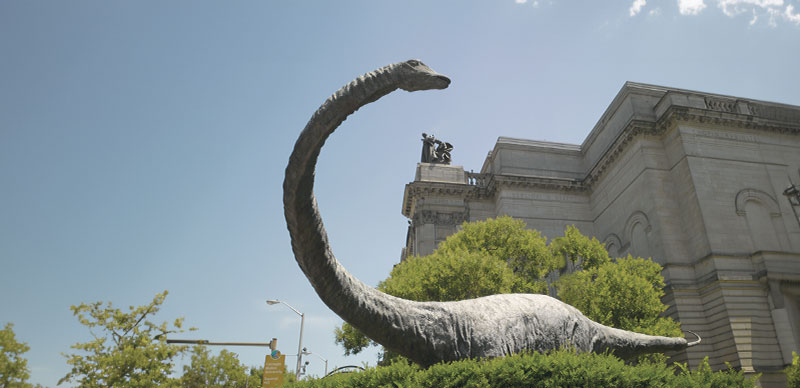
Museum are well-known Pittsburgh Web pages, and now, the Carnegie Museum of Art and
Carnegie Museum of Natural History can offer general information online.
Putting Carnegie Magazine Online
Newcomers to the world of electronic magazines often have a basic question: How
does it get from the print version to the computer screen? The answer involves understanding
the way magazines are made. Today, like most periodicals, each issue of Carnegie Magazine
is created with electronic files from the beginning. Articles arrive at the magazine
office in the form of word processing files on computer disks-this avoids the need
to retype stories for editing, typesetting or printing purposes. The edited word processing
files are sent with accompanying photographs to the graphic designer, who loads both
the text and illustrations onto his computer. While text transfers easily from one
computer file to another, pictures require additional steps. If they are in the form
of photographic prints, negatives or slides, the pictures are put through a scanner-which
is similar to a color copier that outputs to a computer. Here the designer scans the
images to desktop publishing software, where he manipulates both “graphics” and “text”
for the next level of design. After final layout, the digital file goes to a laboratory
where it is copied onto film negatives, and these negatives are sent to the printing
company, which uses them to make the printing plates for the published magazine.
The electronic magazine takes on its identity from the designer’s pre-publication
computer layout. Graphics and text are reformatted for the online readers. To make
pictures or text electronically available to Web viewers, the data is formatted in
a special Web language called HTML (HyperText Markup Language). When this HTML encoding
is complete, the files are sent to the computer lab of the Carnegie Library of Pittsburgh,
which can put the magazine on the World Wide Web.
An excellent way to start learning about the Internet, and to begin using Carnegie
Magazine Online, is to make use of the public computers at libraries such as the Carnegie
Library of Pittsburgh in Oakland. Novice Web browsers in Allegheny County can get
help from librarians at the Allegheny Regional Branch on the Northside, or at any
of the 38 public libraries county-wide participating in the Electronic Information
Network. By late spring of 1996 all Carnegie Library of Pittsburgh branch libraries
will have graphical Web browsers.
If you have a computer with a modem at home and would like to start using the Internet,
a number of commercial services such as CompuServe and America OnLine provide on-ramps
to the information superhighway. In addition a variety of local and regional companies
provide Internet access. The Three Rivers Free- Net maintains a list of all known
providers on its homepage: http://trfn.clpgh.org/Internet/access.html
Magazine articles are easily linked to other information on the World Wide
Web.
The size and range of information on the World Wide Web makes it an excellent resource
for pursuing subjects discussed in online magazines. Take for example this issue of
Carnegie Magazine, which contains an article on the Japanese artist Hiroshige. In
only a few moments the online reader can type in the artist’s name and quickly receive
a biographical text and examples of his work.
When I used the Carnegie Library’s computer in Oakland, all I had to do was click
on the Search button at the bottom of the screen. Next I moved the pointer to the
open window and clicked. I typed the keyword “Hiroshige Utagawa” in the window and
clicked on Submit so that the software could search for it on the World Wide Web.
The search result was about 300 matches, many of which related to the Japanese artist.
Some of these entries contain pictures, as well as historical and biographical information.
One page called Jim Breen’s Ukiyo-E Gallery–Hiroshige, contains pictures of Hiroshige’s
paintings. At the bottom of the page are the words “short biographical sketch of Hiroshige.”
These underlined words are links-by clicking on one I received additional information
on that subject. Another page called Rain and Snow has eight prints by Hiroshige which
can be viewed online, and each picture is described.
The Web is an electronic phenomenon that always changes, and it can constantly
supply you with new information.
Carnegie Magazine’s Photo Archive-Available by Computer
Over the years, Carnegie Magazine has collected nearly 300 pictures which tell
the story of the Institute’s history, ranging from Andrew Carnegie’s birthplace in
Dunfermline, Scotland, to the Carnegie Science Center. With the use of a scanner designed
for slides, these pictures were copied onto six Kodak Photo CD’s. All of these images
will be made available to the public through the Carnegie Library of Pittsburgh in
their electronic form.
Many of these images-but not all of them-are drawn from the historic photograph
collection of the Pennsylvania Department of the Carnegie Library of Pittsburgh, where
the general public can order photographic prints of the images.
The Photo CD’s in the Carnegie Magazine Photo Archive are organized by subject
such as Andrew Carnegie, the Carnegie Library of Pittsburgh, the Carnegie Museum of
Natural History, and the Carnegie Museum of Art, and include recent subjects such
as the Carnegie Science Center and the Andy Warhol Museum as well. Images of old postcards
and cartoons of Andrew Carnegie give this archive collection a special flavor.
The Carnegie Magazine Photo Archive will become available to the public in the
months to come via the World Wide Web.
Mark Petruzzini is a professional writing major at Carnegie Mellon University
and the electronic editor of Carnegie Magazine.
Creating an Online Magazine (Mar/Apr 1996)
Carnegie Magazine is a new stop on the information superhighway by Mark Petruzzini The January/February issue of Carnegie Magazine is the first to be available to the computer community through