A birthday is a good time to take stock. Both Carnegie Museums of Pittsburgh and
Carnegie Library of Pittsburgh celebrated their 100th anniversaries in 1995, and
at Carnegie Museums we took the opportunity to look to the future as we paid our
respects to the past.
The institution underwent a tremendous expansion in the last decade, beginning
with the Carnegie One Hundred committee of community advisors, whose recommendations
helped launch the Second Century Fund. In 1995, this campaign came to a spectacular
conclusion. Carnegie Science Center was fully integrated into the overall organization,
and The Andy Warhol Museum began to find its stride. We celebrated the openings of
new exhibition halls and other improvements.
The years of the Second Century Fund campaign
were a time of introspection as well as growth. Now, rather than settling down to
business as usual, we are focusing outward, looking at how the community has been
changing and at possible barriers between the museums and the people for whom they
were created. Our goal is to remove those barriers and turn our four museums into
even friendlier places, gathering places, and part of everyone’s life.
As you can see, we began by changing our name. Carnegie Museums of Pittsburgh
states more clearly what we do and where we are and includes Carnegie Science Center
and The Andy Warhol Museum, avoiding “The Carnegie’s” association with
only the Museum of Art and Museum of Natural History in Oakland. While our legal
name remains Carnegie Institute, the four museums are distinguishable from Carnegie
Library of Pittsburgh, which shares overlapping services and trustees, but is a separate
organization.
Last year’s annual report announced a strategic planning project with the Pittsburgh
office of McKinsey & Company, Inc. With their help, we have been studying ways
to better structure, manage, and direct ourselves. The results can be found in several
initiatives launched in 1995, and in a number of new programs, more aggressive marketing,
and greater flexibility overall that will be seen more directly in the coming year.
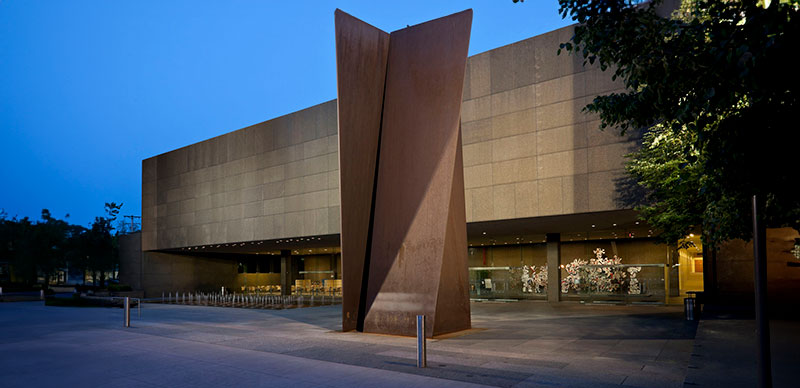
One plan to make the Museum of Art and Museum of Natural History more welcoming
and easier to use is to create an interior “free zone” the length of the
building. The zone will be a kind of town plaza visitors can enter free to meet a
friend, eat at the caf�, or visit the museum shops. While there, they will find
comprehensive information on museum exhibitions and programs; maps and directories
along with occasional tables, comfortable chairs, benches and lamps; and computer
access to the library’s information network. These amenities will accommodate visitors’
needs more completely and make them feel more welcome as they contemplate the remainder
of their stay.
Providing a comfortable place to gather without requiring any fee should encourage
people to stop by often, feel more at home here, and add some life to our dramatic
public spaces. A grant from the Howard Heinz Endowment in 1995 is enabling us to
focus on making the interior of the Oakland building more welcoming.
New marketing strategies that inform are important, but ones that invite are even
more so. Whether we broadcast television commercials of a museum that can boogie,
as we did for the Centennial Opening Event, or make more information available at
each museum about events and exhibitions, the new mood at the Carnegie Museums of
Pittsburgh is one of openness. These changes, complemented by staff training and
market research, will help convey what we do here to those who don’t know us, and
make all of the museums more accessible to those who do.
Helping to oversee this philosophical shift will be five new trustees named to
the Board in 1995. Suzanne W. Broadhurst is an active public service volunteer and
serves on many Boards, including The Pittsburgh Cultural Trust, Carnegie Science
Center, and United Way of Allegheny County. Jerry E. Dempsey is chairman of the board
and chief executive officer of PPG Industries, Inc. Dr. Henry J. Gailliot is chairman
of Federated Investment Counseling. Dr. Peter R. Heinze is senior vice president,
Chemicals Group, PPG Industries, Inc., and George L. Miles, Jr. is president and
chief executive officer of WQED Pittsburgh. In an independent initiative to broaden
the range of people served, the Museum of Art was one of four museums nationwide
to receive a grant from The Pew Charitable Trusts for audience research and community
outreach. The primary aim of the project is to know the people in our community better
so that we can provide programs that we are sure will meet their needs. The museum
selected three distinct segments of the community-African-Americans, families with
young children, and university faculty and students. We will learn what programs
are most desired, what are the barriers to attendance, and what are the avenues through
which these groups gather information about us.
Working with the teachers at Boyce Middle School in Upper St. Clair brings us
in touch with another population. Our project with Pittsburgh’s McCleary Elementary
School, discussed in last year’s report, brings us into contact with an urban population
in a community that lacks many resources. The suburban Boyce Middle School and its
community have different needs. From these two programs we can learn how to work
with various kinds of schools, and then share what we know with other cultural organizations.
The Museum of Natural History is also developing new ways to reach out. The In-School
Program continues to serve the local schools, but taking programs to schools in outlying
communities was difficult. With a grant from CNG Foundation, the museum can now provide
assemblies in schools several hours from Pittsburgh. But when a hundred or more school
children are all focused on a person standing on a stage, of course, one objective
is to entertain. With that in mind, the museum hired actors from Carnegie Mellon
University and trained them to do science shows that keep the children engaged while
they learn. Grant money as well as some money from the schools cover travel costs
and the price of a motel room, enabling the presenters to stay in an area for a couple
of days and visit several schools on each trip.
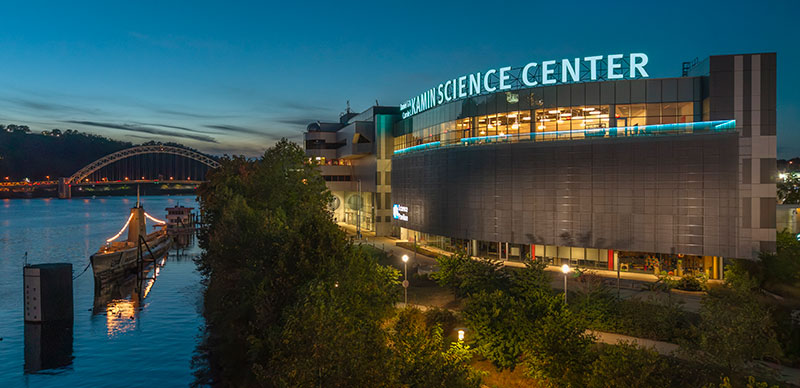
In 1995, the Science Center also made long-range plans that tied into the McKinsey
& Co. recommendations. Market research indicated that visitors expected more
frequently changing exhibits, and more interactivity. At Ports of Discovery, for
example, every visit results in a different experience, based on which animals are
awake, where a visitor participates at the water table, or which of the games or
projects appear most captivating that day. The staff of the Science Center worked
with a team of teachers to develop first-floor exhibits that would provide a similar
level of interactivity while connecting with school curricula. A grant from The Grable
Foundation enabled us to do this project, and the new exhibits based on flight, natural
forces and waves will be complete by November of 1996.
Another result of this long-range planning was the decision to develop traveling
exhibits. Collaborating with researchers from Carnegie Mellon University and with
local industry, the Science Center will have a new Robotics exhibition in place in
the fall of 1996. This topic was chosen because it ties in with the developing technology
of this region and fulfills the Science Center’s mission to enable visitors to become
secure enough with science and technology to profoundly affect their lives and their
careers. When this exhibit travels, the Pittsburgh region itself will be showcased
as a leader in robotics and other advanced technologies.
As we studied our institution, it became clear that if we were to improve our
communication with visitors, we would also have to improve internal communication.
This is especially true of a complex organization such as ours, with museums on three
sites, off-site storage, and Powdermill Nature Reserve in the Laurel Highlands. To
this end, we are establishing an electronic network that will utilize Carnegie Library
of Pittsburgh’s new county-wide network. And we are planning the installation of
an automated ticketing, reservations and scheduling system that will link all of
our museum sites, providing audience survey and admissions information to many departments.
This system has been funded generously by the Richard King Mellon Foundation.
But the Internet can do much more than that. The Museum of Natural History is
already exploiting this new technology with NATUREnet, which is being developed by
a consortium of museums to catalogue and make available the biodiversity of North
America. New ways of transmitting information are developing all the time, and it
is the job of the museum to keep up with technology and provide that information,
because in many cases the museum itself is the source. Why do we develop these tools
of virtual reality? “We are reality,” says Jim King, director of Carnegie
Museum of Natural History. “Virtual reality is a tool to help people know what
we have and to explore the scientific discoveries about our dinosaurs or other collections
in ways that were impossible a few years ago.”
“Museums are user-friendly,” King says. “Children come here ready
for some fun.” Soon they may find computer stations next to artifacts or works
of art. They may call up a museum home page on the school computer, or enter a dialogue
with a museum curator on a chat line. No technology will replace the relationship
between a visitor and an object, but information adds new dimensions to the objects,
deepening the relationship. While the Carnegie Museums of Pittsburgh are physical
places, they run on information.
The past year, then, was a year to pause, evaluate, and lay a course for the future.
But it was also a year to celebrate, and since most birthdays are celebrated with
a party, Carnegie Museums and Carnegie Library of Pittsburgh threw an enormous party
for 28 straight hours from Friday, October 6 through Saturday, October 7. There were
fireworks, games, party favors, giant cakes and-since this was no ordinary birthday
party-tours of a submarine and an all-night cult film festival. This free occasion
was attended by 56,000 people and was the work of 900 specially trained volunteers
and 800 staff members. The efforts of Janie Thompson, chairperson of the Centennial
Celebration, and Suzy Broadhurst, chairperson of the Centennial Opening Event Planning
Committee, were especially noteworthy. These two volunteers can take much credit
for the success of the celebration.
On November 5, the actual anniversary of the opening of Carnegie Institute and
Carnegie Library of Pittsburgh, a Rededication Ceremony was presented before an invited
and near-capacity audience in Carnegie Music Hall. The event, which was coordinated
by trustees Edith H. Fisher and James A. Fisher, featured a multimedia history of
the Institute and Library that included bagpipe music, video, slides, and live performances.
During the ceremony, Arthur Ziegler, president of the Pittsburgh History and Landmarks
Foundation, presented a plaque naming the building a historic landmark.
Also in honor of the anniversary, we launched a new major gifts effort we are
calling Centennial Patrons. This group of supporters, 142 as of this writing, responded
to our invitation to make a contribution ranging from $1,895 to more than $10,000.
Centennial Patrons were invited to experience the museums on a more intimate level
through special tours and receptions with the directors and curators, and to know
that they are furthering the work of a 100-year-old institution that enriches western
Pennsylvania and touches the lives of millions of people each year.
While the entire organization was involved in the Opening Event, each museum also
held programs to mark the anniversary. At the Museum of Art, the exhibition calendar
was dominated by the 52nd Carnegie International, which was postponed one year so
that it could coincide with the Centennial. This exhibition, which was sponsored
by PNC Bank Corp., once again drew visitors and art media from all over the world.
Held in conjunction with the International, Monolithic Architecture was The Heinz
Architectural Center’s first major exhibition to contribute to the dialogue on contemporary
architecture.
Other major exhibitions at the Museum of Art included the Pittsburgh premiere
of The Cave, a music and video installation by composer Steve Reich and artist Beryl
Korot that opened in January. This work premiered in Vienna in 1993 as a contemporary
opera on a stage; as an installation, it made use of five simultaneous video monitors
in a specially constructed wall. Karl Friedrich Schinkel, 1781-1841: The Drama of
Architecture opened in February and exhibited the designs of this important 19th-century
architect whose work was largely unknown in this country prior to Germany’s reunification.
From March through May, the museum hosted a large silver exhibition, Silver in America,
1840-1940: A Century of Splendor. The flatware alone included spoons specifically
for eating pudding, berries, oysters, olives, oranges, grapefruit and ice cream,
illustrating the American desire to draw attention to these expensive new foods.
One special contribution the Museum of Art made to the Centennial was the publication
of a book of collection highlights. The exquisite, full-color book contains a history
of the collection by museum director Phillip M. Johnston and will be a valuable resource
for many years to come.
And finally, 1995 saw the resignation of Johnston, who will depart in May 1996.
Johnston came to the museum in 1982 as curator of decorative arts and became director
in 1988. Projects accomplished during his tenure include The Heinz Architectural
Center in 1993 and The Andy Warhol Museum in 1994, the reinstallation or refurbishment
of every permanent collection gallery, a conservation program that tripled in size,
endowments for art acquisitions and the directorship, the Forum gallery program,
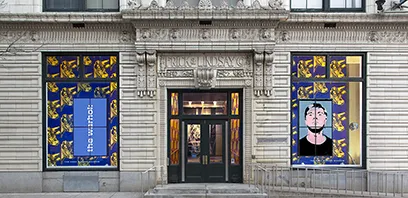
and increased educational programs. At The Andy Warhol Museum, we launched an exhibition
program of artists closely related to Warhol, beginning with Jean-Michel Basquiat:
The Blue Ribbon Paintings and, during the International, an installation by the German
artist Joseph Beuys: Arena-where would I have got if I had been intelligent! The
Weekend Factory, a playful and popular educational program, was started last spring
and lets visitors experiment with Warhol’s own artistic techniques.
Looking ahead, plans were drawn up for a major exhibition of Andy Warhol’s work
to travel to Japan in 1996, consisting of 125 paintings, eight sculptural works,
55 drawings, photographs, archival materials, room environments and a film program.
Warhol was profoundly influenced by a visit he made to Japan in 1956, the first time
he had traveled overseas. “In Japan, Warhol deepened his vision of himself as
an artist,” explains curator Mark Francis.
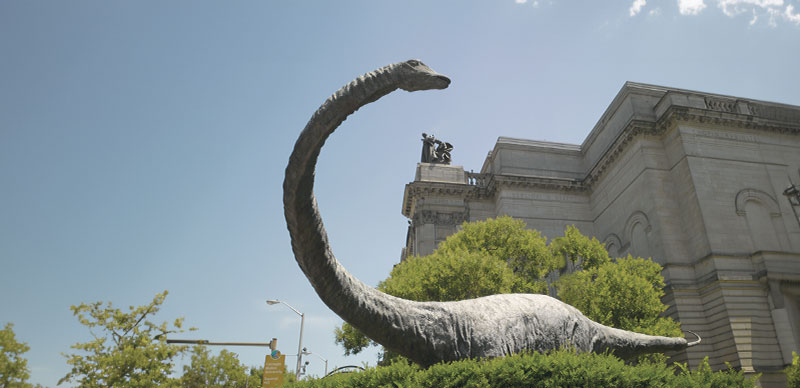
The most visible change at the Museum of Natural History was the opening of the
newly renovated Hall of North American Wildlife in November. The hall’s classic dioramas
were refurbished and enhanced with insects, plants, birds and small mammals to create
complete biomes. The male Alaskan Brown Bear had been inappropriately shown in a
family group that has now been reconfigured with the large male outside the glass
in a menacing posture.
Apart from this “new” hall, the past year was primarily a year of base-
building at the museum. Contractors finished the space that will hold the Alcoa Foundation
Hall of Native Americans, and exhibit fabrication has begun. The subject of the hall,
which will open in the summer of 1997, will be native cultures and their relationship
to the natural world. It will also explore the realities of being a native person
today, in circumstances in which it can be difficult to maintain a link to one’s
heritage.
In May, Chris Beard and Mary Dawson from the museum’s Section of Vertebrate Paleontology
and colleagues from the Institute of Vertebrate Paleontology and Paleoanthropology
in Beijing discovered fossils documenting an early stage in the evolution of higher
primates while working alongside the Yellow River in central China. The 40 million-year-old
primate, represented by its complete lower jaws, was named Eosimias centennicus in
honor of the Centennial. This discovery supports a new theory-that the higher primate
lineage, which includes the distant ancestors of humans, split off from all other
primates about 55 million years ago, during the early part of the Age of Mammals.
Many people visit the Science Center for the fantastic voyages that take place there.
The Henry Buhl, Jr. Planetarium produced both Through the Eyes of Hubble and Journey
into the Living Cell in 1995, and packaged both shows for global distribution. Journey
into the Living Cell was funded in part by the National Science Foundation with the
largest grant ever awarded for a planetarium production. Additional funds were provided
by The Buhl Foundation and SmithKline Beecham. Developed in collaboration with two
departments at Carnegie Mellon University, the Studio for Creative Inquiry and the
Center for Light Microscope Imaging and Biotechnology, the program uses computer
graphics and video in an interactive experience that lets the audience determine
the path through the cell components. These remarkable programs are made possible
by a new kind of planetarium projector, the Digistar II, which is actually a computer
graphics projection system that displays images on the planetarium dome. We were
able to purchase the Digistar II with a gift from the Emma Clyde Hodge Memorial Fund.
In the Education Division of the Science Center, the number of students who participated
in the programs grew significantly. Workshops, Discovery Days, and Science Caravan
had students searching for missing planets, building an aircraft, or finding out
how different items react when chilled with liquid nitrogen. Children learned some
of the basics of math and graphing when they studied each other’s pets, and saw science
come to life with baby chicks as well as penguin and ostrich eggs. These outreach
programs reached 168,500 students in all, a 23% increase over 1994 and a strong indication
that we are meeting important needs.
When Phillip Johnston attended a conference in Chicago last year to discuss the
importance of the arts, he repeatedly ran into people who had spent time in Pittsburgh,
growing up or going to school or working. Without exception, they each remarked on
the enormous effect of the museums and libraries on their lives. One man, when he
was young, had spent every afternoon after school at Carnegie Institute until his
mother could pick him up. It had been his safe zone and a place to be completely
free. A young local attorney mentioned recently that the Museum of Art had gotten
him through law school-that he came to the museum when he was feeling tense or overwrought.
The best reasons to keep doing what the Carnegie Museums of Pittsburgh have been
doing for the past 100 years are people like that. The goal is simply to find new
ways to be that safe zone, that solace, and that place of learning, for as many people
as possible.
To view a list of Carnegie officers, trustees, and contributors, click
here..Carnegie Institute
1995 Attendance
Total Attendance: Carnegie Museum of Art, Carnegie Museum of Natural
History and Other Programs862,900Total Participants: Outreach Programs
and Classes, Carnegie Museum of Art*34,000Total Participants: Outreach Programs
and Classes, Carnegie Museum of Natural History*179,300Total Attendance: Carnegie
Science Center795,300Total Participants: Outreach Programs and Classes, Carnegie
Science Center*180,900Total Attendance: The Andy Warhol Museum69,700Total
Participants: Outreach Programs and Classes, The Andy Warhol Museum*1,050Total
Attendance: Three Rivers Arts Festival600,000Total Membership (Households)27,500*This
figure is also included in the appropriate museum’s total attendance number.This
annual report was prepared for the Office of the President by Ellen S. Wilson.
Return to the Table of Contents.