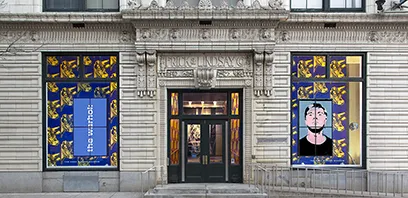
In 1985, the electronics company Commodore introduced the world to the then-revolutionary Amiga 1000 personal computer. Amid great fanfare that featured a full orchestra and tuxedo-clad employees, the PC took center stage at New York City’s Lincoln Center, accompanied by two revolutionaries in their own right—Andy Warhol and Blondie’s Debbie Harry. Never one to miss an opportunity to explore uncharted media, Warhol eagerly took on his new role as a Commodore brand ambassador. His assignment that day: Use the Amiga’s ProPaint software to create a portrait of Harry in real time in front of a live audience. Warhol accomplished that goal, and more. For decades, 28 of his digital works—among them, two self-portraits and the untitled renderings of a banana and Campbell’s soup can—existed only on floppy disks stored within The Warhol’s archives. Then in 2014, the museum, artist Cory Arcangel, Carnegie Museum of Art, and Carnegie Mellon University’s computer club set out to rescue the paintings from their decadeslong purgatory. After painstakingly reverse-engineering the program, the CMU squad revived Warhol’s digital images. In May 2021, five of them were minted and auctioned as nonfungible tokens by The Andy Warhol Foundation for the Visual Arts, Inc. and Christie’s.
Andy Warhol’s Amiga Digital Art
In 1985, the electronics company Commodore introduced the world to the then-revolutionary Amiga 1000 personal computer. Amid great fanfare that featured a full orchestra and tuxedo-clad employees, the PC took