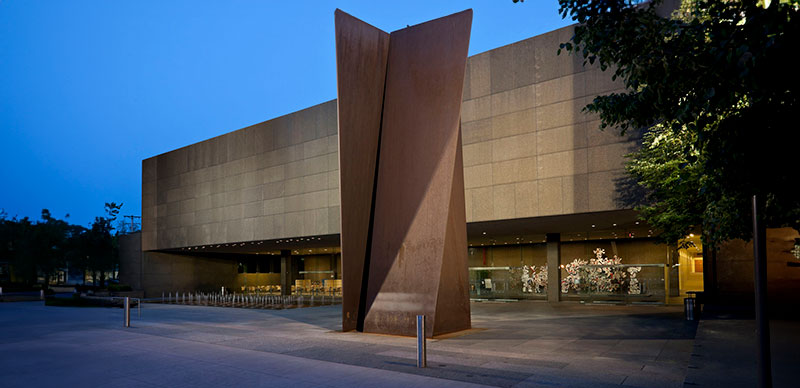
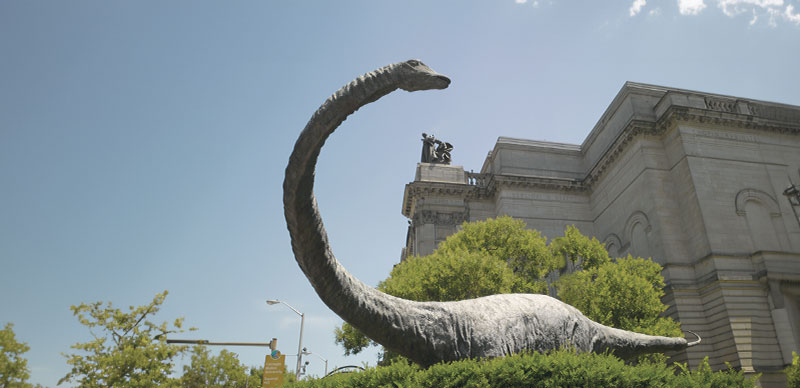
Visitors who explore the shared Carnegie Museums and Library building in Oakland often marvel at the architecture and its head-turning multicolored marbles and limestones. What they might overlook, however, are the fossils buried in those beautiful stones. Look closely at the columns and pillars of the Grand Staircase and the walls in the Music Hall foyer and you’ll find a variety of seashell species preserved in the Échaillon limestone, mined from cliffs in the valley of the Isère River of the western Alps in southeastern France. Look closely at the beige Hauteville stone, also from France, that covers the Grand Staircase walls and the floors of the Halls of Sculpture and Architecture to discover 5-inch-long Nerinea snails. It took Albert Kollar, geologist and collection manager for invertebrate paleontology at Carnegie Museum of Natural History, and his French colleagues years of fieldwork to authenticate the provenance of the stones.
“Hidden” Fossils
Visitors who explore the shared Carnegie Museums and Library building in Oakland often marvel at the architecture and its head-turning multicolored marbles and limestones. What they might overlook, however, are